

AI&Future Tech
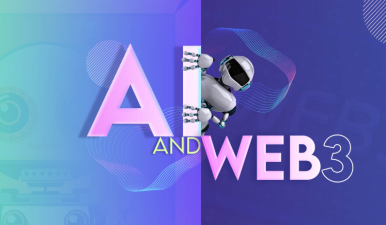
The Convergence of AI and Web3
Driven by the ongoing technological revolution, Artificial Intelligence (AI) and the third-generation Internet (Web3) are moving from independent development to deep integration. When AI's intelligent decision-making capabilities meet Web3's decentralized and user-sovereign characteristics, a revolution in the future form of the Internet is quietly brewing. Is this integration merely a simple superposition of technological concepts, or is it the key to unlocking the next generation of Internet revolution?
How AI Is Transforming Human Potential
When we talk about AI, we often focus more on its functions: what it can do, how it improves efficiency, and how it replaces human labor. However, the true value of AI lies not in what it can do, but in how it helps humanity become better human. This seemingly contradictory proposition actually reflects a deeper insight: the significance of AI should not be limited to its instrumental attributes, but should be viewed in terms of its macro-level impact on the evolution of human civilization.
The emergence of AI is like a quietly arriving revolution. It operates without gunpowder, yet it is changing the face of the world with lightning speed. Some see it as a monstrous threat, fearing it will replace humanity; others regard it as a panacea, praying it will solve all problems. However, the essence of AI is far more complex. It is neither an enemy nor a god, but a completely new form of civilization, a "symbiotic entity" whose fate is inextricably linked to humanity's.

Is Web3 Still the Future of the Internet?
With the development of the internet, from the static webpage era of Web 1.0 to Web 2.0 centered on user-generated content and interaction, the evolution of internet technology and applications has driven tremendous social changes. However, Web 2.0 has also exposed many problems, such as privacy data leaks, platform disruptions, and excessive collection and control of user data. Web 3.0 emerged in response, considered a vision for the next generation of the internet, aiming to build a more decentralized, user-driven, and transparent network environment.
Web 3.0, the third generation of the internet, is a decentralized network based on blockchain, considered by the industry as the foundational technology driving the metaverse.
In the Web 3.0 world, ownership and control are decentralized. Theoretically, both builders and users can enjoy specific network services. Driven by the global blockchain technology boom, can Web 3.0 become mainstream in the near future? Is it truly revolutionary technology that will disrupt the network world as claimed? Will the metaverse become a reality in the near future? Can it achieve its claimed "decentralization," or is it merely a publicity stunt to become the next "center"?
What’s Next for the Metaverse?
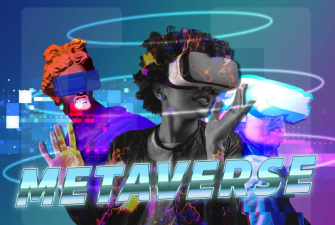
The metaverse, also known as the meta-universe, metaphysical universe, meta-realm, extrasensory space, or virtual space, is an online virtual space that interacts with the real world. All events in this space occur in real time and have a permanent impact. There is no definitive definition of the "metaverse" yet. Wikipedia describes it as: a virtual augmented physical reality, a 3D virtual space with convergent and physically persistent characteristics, based on the future internet, and possessing connected perception and sharing features.
With the advent of Internet 3.0, Industry 4.0, and Society 5.0, the metaverse has become a highly anticipated industrial field and research hotspot. As a positive vision of the ultimate form of future society, the relationship between the virtual world constructed by the metaverse and the real world has become a focal point of discussion.
Why AR and VR Are Becoming Mainstream
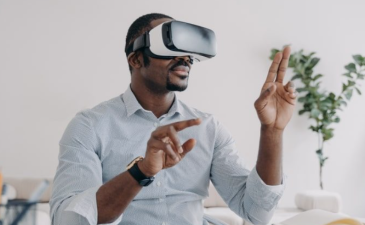
Augmented Reality (AR) is a technology that overlays virtual information onto the real world, enhancing our perception of reality through computer-generated sensory input (such as sound, video, graphics, or GPS data). Unlike Virtual Reality (VR), which creates a fully immersive digital environment, AR adds digital elements to the real world, achieving a completely new experience that combines the virtual and the real.
The core of AR technology lies in the real-time calculation of the position and angle of camera images, and the addition of corresponding images, videos, or 3D models. This technology can be traced back to the 1960s, but it only truly entered the public eye in recent years with the widespread adoption of smartphones and wearable devices.
The Future of AI Is Closer Than You Think
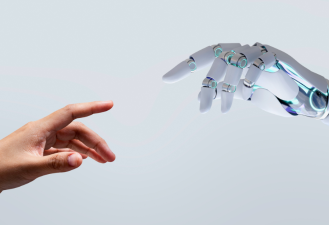
With the rapid development of technology, artificial intelligence (AI) has gradually transformed from a science fiction fantasy into an important part of real life. However, this is just the beginning. As we look to the future, how will AI continue to evolve and impact our lives, work, and social structures? Since its inception, generative AI has been constantly evolving. We have seen developers at companies like OpenAI and Meta move from large models to smaller, cheaper models, improving AI models to accomplish the same or more work with fewer resources. As models like ChatGPT become more intelligent and better able to understand the nuances of human language, hinting engineering is changing. Because LLMs are trained with more specific information, they can provide deep expertise to specialized industries, becoming agents ready to help accomplish tasks.
AI is not a fleeting technology. It is not a phase. More than 60 countries and regions have developed national AI strategies to leverage the advantages of AI while mitigating its risks. This means significant investment in R&D, reviewing and adjusting relevant policy standards and regulatory frameworks, and ensuring that the technology does not undermine fair labor markets and international cooperation.
What Is Spatial Computing and Why Does It Matter?
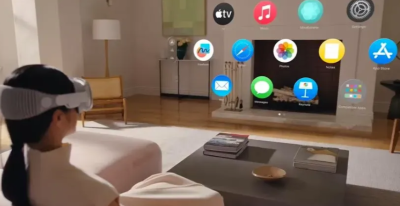
Spatial computing is a computing paradigm that integrates digital information with the physical world in real time, enabling machines to perceive, understand, and interact with three-dimensional space. Its core is the "virtual-real integration" and natural human-computer interaction (such as gestures, eye tracking, and voice), achieved through technologies such as AI, 3D reconstruction, SLAM, and XR (AR/VR/MR). Its importance lies in redefining human-computer interaction from a "two-dimensional screen" to "three-dimensional space," promoting screenless, contextualized, and immersive experiences. It improves efficiency and security in fields such as industrial inspection, medical surgery, smart cities, retail guidance, and education and training. Furthermore, as the underlying support for the metaverse and AI-based physical interaction, it is becoming a key cornerstone of the next generation of computing platforms after mobile computing.
What Is Driving the Future of Digital Intelligence?
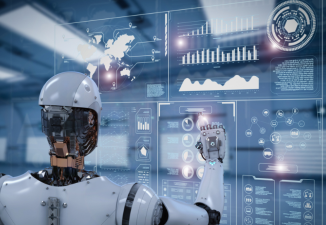
The future internet will be centered on AI intelligent agents, building a new digital ecosystem of human-machine symbiosis and virtual-real integration. From autonomous execution to cross-platform collaboration, intelligent agents will reconstruct the internet's operational logic; integrated computing and network technologies and space-air connectivity will solidify the digital foundation; data-real integration will drive industrial transformation, and the release of data value and compliance governance will advance simultaneously, ultimately leading to a more efficient and equitable digital civilization. From PC interconnection to mobile interconnection, and now to intelligent interconnection, the internet is undergoing its third paradigm shift. 2026, as a key juncture for technology implementation and industrial transformation, will see the deep integration of technologies such as artificial intelligence, computing networks, digital twins, Web3.0, and satellite interconnection, propelling the internet from information connectivity to intelligent collaboration, from traffic competition to value creation, and from platform monopoly to open co-governance. In the next five to ten years, the internet will be centered on AI intelligent agents, based on integrated computing and network technologies, driven by data-real integration, linked by data value, and grounded in compliance governance, building a new digital ecosystem of human-machine symbiosis, virtual-real integration, and security and controllability.
What Will Artificial Intelligence Look Like in the Next Decade?
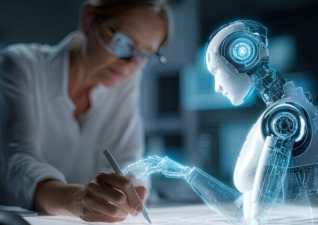
The development trend of artificial intelligence in the next decade will feature multi-dimensional breakthroughs and deep integration, including technological architecture upgrades and a revolution in quantum computing and computing power. Quantum algorithms will accelerate complex computational processes such as molecular simulation, shortening drug development cycles from years to days. The widespread adoption of dedicated neural network chips (such as TPUs/NPUs) will enable edge computing devices to achieve real-time AI processing, supporting real-time decision-making scenarios such as autonomous driving. A leap forward in multimodal cognition will occur as native multimodal models break through the limitations of single modalities, achieving the fusion of vision, speech, touch, and other senses.

The Technologies Building Tomorrow’s World
Looking back from the juncture of 2026, humanity's vision for "tomorrow" has never been as clear and dynamic as it is today. From the 1939 New York World's Fair, which showcased early technological marvels like television and nylon under the theme "Building the World Tomorrow," to the current deep integration of artificial intelligence, green energy, and smart construction technologies into the fabric of society, technology is no longer merely an auxiliary tool, but a core force reshaping civilization and defining future lifestyles. In today's era of deep integration of digitalization, intelligentization, and greening, technology is building a smarter, fairer, and more sustainable world with unprecedented depth and breadth.